Falkirk, Scotland · Roofing Guides
Your roof has a shelf life. Here’s how to find out how much of it is left.
What this guide covers
Key Takeaways
- Concrete tiles typically last 40-60 years, clay tiles 60-100 years or more, and natural slate 80-150 years or more.
- The tile itself is rarely the first thing to fail. Felt, fixings, ridge mortar and flashing usually wear out sooner.
- Falkirk’s wind-driven rain and frost can pull a roof toward the shorter end of its range if small problems go unchecked.
- A yearly check each autumn, and another after any big storm, is the simplest way to add years to a tiled roof.
- When damage spreads across a large part of the roof, a full replacement usually beats repeated patch repairs.
Most people never think about how old their roof tiles are until a storm drops one in the garden. Then the question lands all at once: how long roof tiles last in the UK, and is yours running out of time?
The honest answer depends on three things: what the tile is made from, how well it was fitted, and how hard the weather has worked on it. This guide gives you real lifespan ranges for each tile type, explains what usually wears out first, and shows you how to read the age of your own roof in Falkirk, Livingston, Blackburn and the surrounding area.
How Long Do Roof Tiles Last in the UK?
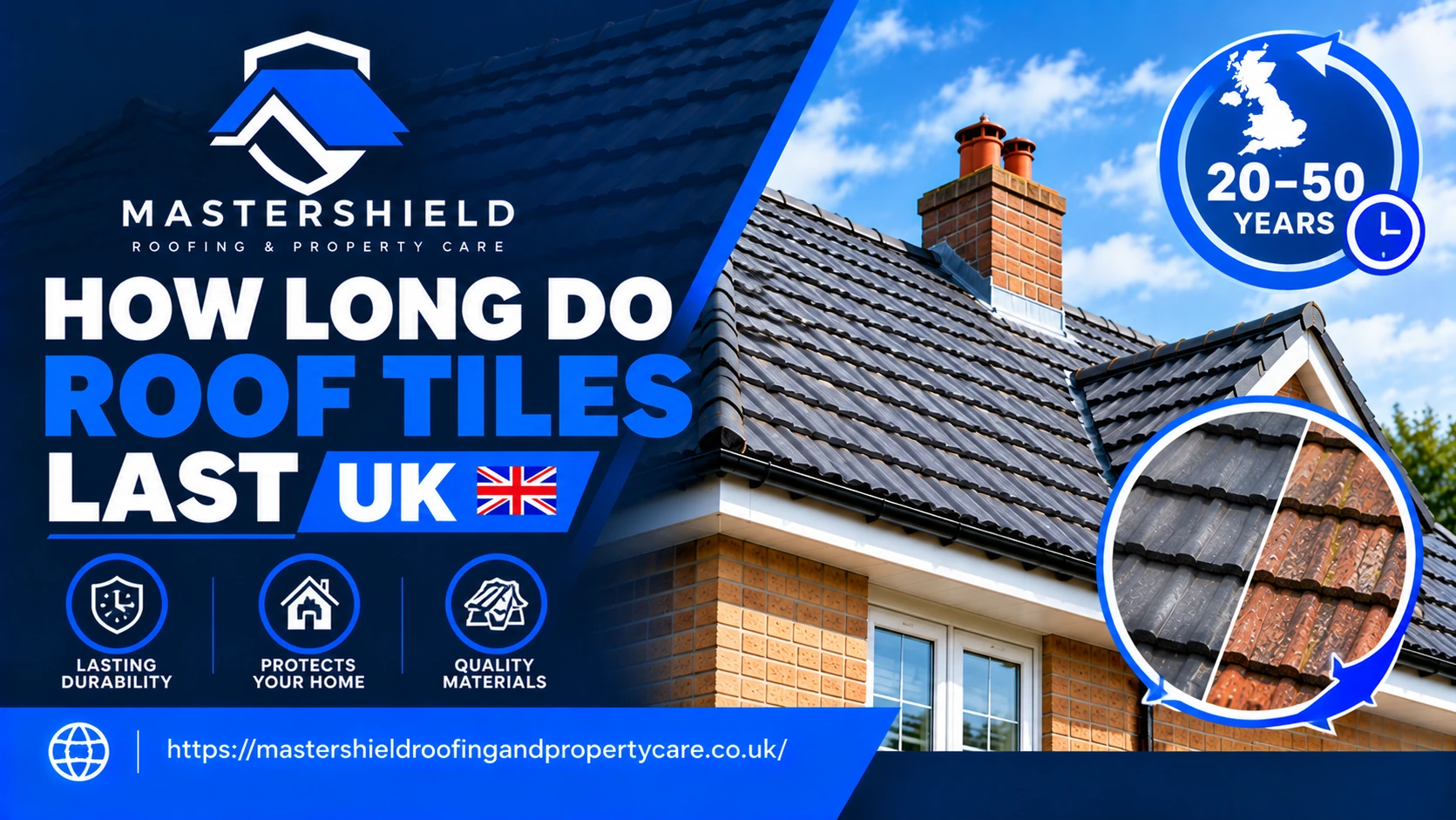
For a well-fitted roof that gets reasonable care, the typical ranges look like this: concrete tiles last 40-60 years, clay tiles 60-100 years or more, and natural slate 80-150 years or more. Those are ranges, not promises. A poorly fitted roof, blocked gutters or a very exposed site can cut them short. Good maintenance can push a roof toward the top of its range.
It also helps to separate the tile from the roof. When people ask how long roof tiles last, they usually mean the whole covering, including the felt, battens and fixings underneath. Those parts often wear out before the tiles do, which we cover below.
How Long Does a Tile Roof Last in Falkirk’s Weather?
The honest answer to how long a tile roof lasts in this part of Scotland is “a little less than the brochure says, unless you look after it.” Wind and frost don’t care which town a roof sits in, so roofs in Falkirk, Livingston and Blackburn all face the same pattern of wind-driven rain and freeze-thaw cycles.
Here’s how frost does its damage. Water soaks into tiny cracks and pores, freezes overnight and expands. Over many winters, that slowly widens the damage. Roofs in areas with heavy freeze-thaw cycles tend to sit at the lower end of their lifespan range, which is why a quick check after each winter pays off.
Concrete, Clay and Slate: Lifespan by Tile Type
Each material ages in its own way. Knowing which one you have tells you what to watch for.
| Tile Type | Typical Lifespan | How It Shows Its Age |
|---|---|---|
| Concrete tiles | 40-60 years | The surface slowly erodes, leaving tiles porous and brittle |
| Clay tiles | 60-100+ years | Machine-made tiles tend to age sooner than handmade ones |
| Natural slate | 80-150+ years | Rusted nails and decayed boards fail before the slate does |
| Synthetic slate | 40-60 years | A lighter, cheaper look-alike with a shorter life than real slate |
Concrete tiles became the standard covering on many British homes from the 1960s onwards. Manufacturer guarantees are often shorter than the real-world life, so a roof that passes its guarantee date isn’t automatically finished. Colour fading is usually cosmetic. The thing to watch for is the surface wearing away until the tile soaks up water.
Clay tiles are the long-distance option. Handmade clay sits at the top of the range, while cheaper machine-made versions tend to sit lower. Frost is their main enemy, because water trapped in a cracked tile expands when it freezes.
Natural slate is the champion for longevity. Historic Environment Scotland says a lifespan of 100 years or more is quite common for Scottish slate, though its Engine Shed guide notes that slate hasn’t been quarried in Scotland since the 1950s, so reusing sound slates for repairs matters.
On an older slate roof, ask your roofer to try the tap test. A sound slate rings clearly when tapped lightly, while a porous one gives a dull sound. It’s a quick, cheap way to judge how much life a slate still has.
What Usually Fails First (It Isn’t the Tile)
This is the part most guides skip. A roof is a system, and the tile is only the visible layer. That’s why a 30-year-old roof can leak even though every tile still looks fine from the ground.
The Hidden Parts That Wear Out Sooner
What to ask about when someone inspects your roof
Judging a roof by its tiles alone is the most common way homeowners misread its age. A roof can look tidy from the street while the felt and fixings underneath are on their last legs, so always ask for the condition of those layers, not just the tiles.
The Lifespan of Tile Roofs, Decade by Decade
You don’t need to guess when to act. A simple rhythm, based on your roof’s age, keeps small issues from becoming big ones.
What to Do at Each Stage
A rough guide for a typical concrete tile roof
Historic Environment Scotland advises inspecting a slate roof at least once each autumn, before winter sets in, and again after any storm or gale. That’s good advice for any tiled roof in this part of the country.
Why You Can Trust This Guide
Written from real, hands-on roofing experience in Falkirk
Written by a specialist
This guide is written by Farooq Mir, drawing on Mastershield Roofing & Property Care’s hands-on tile and slate work across Falkirk, Livingston and Blackburn.
14+ years of local experience
Mastershield has repaired and replaced tiled roofs across the Falkirk area for over fourteen years.
Checked against official guidance
Lifespan figures here are cross-checked against Historic Environment Scotland’s Engine Shed and the NFRC.
Free, itemised quotes
Every recommendation here leads back to the same standard Mastershield applies on-site: a free inspection and a clear, itemised quote.
Repair or Replace? A Simple Yardstick
Once your roof is past the halfway point of its expected life, a fair question is whether to keep patching or to plan a replacement. Historic Environment Scotland’s Engine Shed guidance on slate roofs gives a useful yardstick: if more than 20-25% of the roof covering is affected, it usually makes more sense to re-slate the whole roof than to replace individual slates. It’s written for slate, but the same logic works well for any tiled roof.
Scattered, isolated problems point to repair. Damage spread across large areas, repeated leaks, or rusting fixings across the whole roof point to replacement. If you’re not sure which camp you’re in, our guide on how to tell if your roof needs replacing walks through the warning signs, and the re-roofing team can explain what a full replacement involves.
Roofers who belong to a recognised trade body such as the National Federation of Roofing Contractors are used to giving honest, standards-based advice on whether a roof has years left. You can also read more about Mastershield’s experience across Falkirk, or head to the roofing Falkirk service page to see the full range of work covered, including in Livingston and Blackburn.
Frequently Asked Questions
How long do roof tiles last in the UK?
Concrete tiles typically last 40-60 years, clay tiles 60-100 years or more, and natural slate 80-150 years or more. Fitting quality, weather exposure and maintenance all move a roof toward the shorter or longer end of those ranges.
How long does a tiled roof last in Scotland?
The ranges are broadly the same as the rest of the UK, but Scotland’s wind-driven rain and frost can push a roof toward the lower end if small problems go unchecked. Regular checks each autumn and after storms help a tiled roof reach its full lifespan.
Which roof tile lasts the longest?
Natural slate lasts longest, commonly 80-150 years or more, followed by clay tiles at 60-100 years or more. Concrete tiles are the most affordable but typically last 40-60 years.
How do I know if my roof tiles are near the end of their life?
Look for crumbling or porous tile surfaces, widespread slipped or cracked tiles, sagging, daylight in the loft, and repeated leaks in different places. A professional inspection can also check the felt, battens and fixings underneath, which often show wear first.
Can old roof tiles be repaired instead of replaced?
Yes, when the problems are isolated and the rest of the roof is sound. If damage spreads across a large share of the roof, or the fixings underneath are failing, a full replacement usually gives better long-term value than repeated repairs.
Can I get a free roof inspection in Falkirk?
Yes. A free, no-obligation inspection is the best way to find out how much life your roof has left, based on its actual condition rather than a generic age estimate.
Find Out How Much Life Your Roof Has Left
Book a free, no-obligation inspection and get a straight answer on your tiles, felt and fixings, with nothing hidden and no pressure.
Get Your Free Quote →